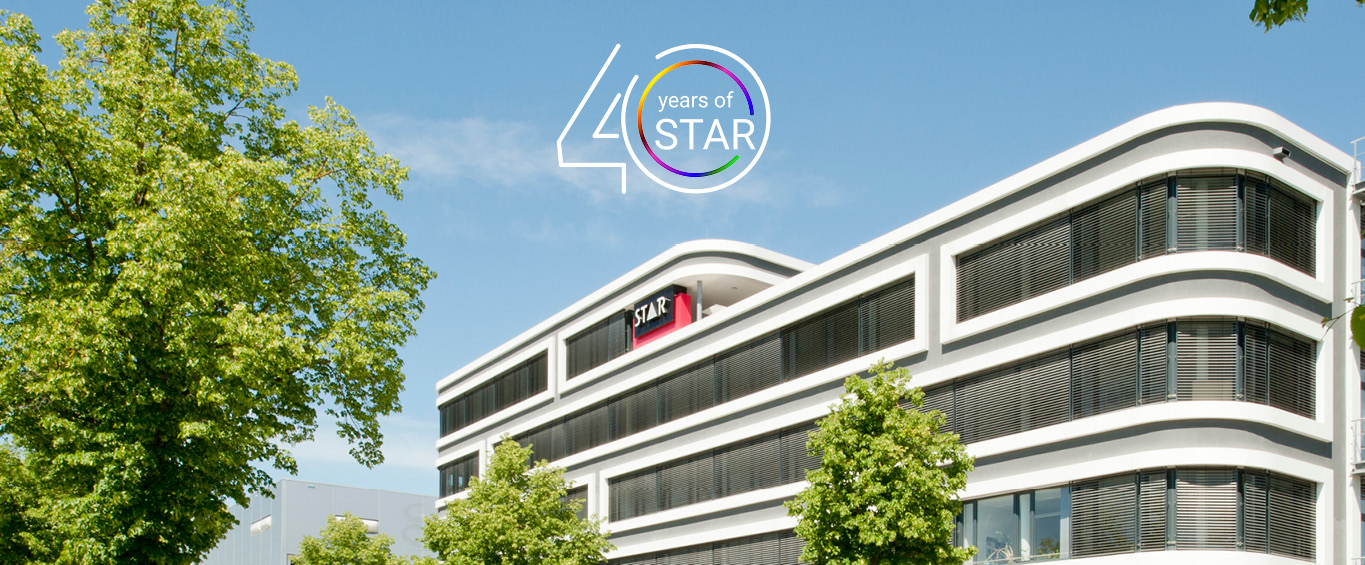
A 40-year company history in the language services sector is a small eternity in our fast-paced industry – and yet it feels as though it has all flown by. In this interview, our company founder Manfred Hoelzgen looks back on a career that has seen a radical evolution of the industry, from typewriters to AI-assisted workflows – and explains why curiosity and a passion for technology are still our greatest driving forces to this day.
From freelance translator to language service provider
When our founder talks about his early days in the industry, it soon becomes clear that it wasn’t a corporate strategy that started it all, but a heartfelt passion for translation. He worked as a freelance translator for more than a decade before taking the plunge in 1986 and setting up his own business together with colleagues from STAR AG, which is based in Switzerland. The idea was clear: professional, specialised IT translations for major technology clients – using in-house, permanently employed translators.
At the time, this was a gap in the market: IT was complex, documentation was extensive, and quality output in the target language was becoming increasingly critical for businesses. Anyone who has ever localised a mainframe or software release involving hundreds of pages of documentation knows just how much attention to detail and consistency is required. Added to this was a vision that is still part of our DNA today: to view language processes not merely as a service, but as an integral part of our clients’ product development.
Think globally, deliver locally
Right from the very beginning, internationalisation played a key role. Instead of relying solely on external supply chains, the company was able to utilise the teams that had since been established in the STAR Group’s offices around the world in the target-language countries. His conviction was that in-country specialist translators, who have been trained in-house and work closely with the project teams, could be relied upon to handle even the most challenging languages.
The STAR Group’s international approach was both unorthodox and technologically challenging. Setting up companies in countries with a completely different infrastructure, different regulations and a different business culture was, at the time, anything but straightforward. But the long-term benefit was clear: stable processes, direct communication and a profound understanding of local markets. The foundations for managing complex multilingual projects seamlessly and efficiently were laid early on.
The phone call that changed everything
An episode from the early years of the business illustrates just how much the relationship between clients and language service providers has changed. Around the year 2000, a buyer from a large company made a comment that you rarely hear these days: “I’d love to see what you’re doing there.”
What followed was a meticulously planned on-site presentation: real-life projects on the desks, carefully considered answers to hypothetical questions, a tour of the production facilities. At the end of the visit, he uttered the momentous words, “I’d like to work with you.” That marked the start of a long-standing partnership – no tenders, no bids.
Nowadays, many purchasing processes are conducted via international tenders, online portals and bids. Face-to-face conversations are being replaced by KPIs, prices and SLAs. This anecdote reminds us of the importance of genuine quality, transparency and trust – even in a world where procurement processes have become highly formalised.
From a 10 MB hard drive to AI-assisted workflows
The technological advances witnessed by our company’s founder are simply astonishing. When the company took delivery of its first PCs, the hard drive had just 10 megabytes of memory. Nowadays, of course, we’re in the realm of several terabytes, cloud infrastructures and distributed systems. That’s more than just a number – it forms the basis for how we think about language processes today.
In the early days we worked with the hardware and software that our customers used. This meant Olivetti floppy disk typewriters, specialised word processing systems or proprietary text editors – each with their own specific workflows and file formats. To ensure that language projects could still run efficiently, the company needed IT-literate staff who were equally proficient in both technology and language. It is precisely this intertwined skill that continues to shape our work to this day.
How change macros became translation memory
One particularly intriguing aspect of this story is the development of translation memory technology. In large IT projects, the very same phrases kept cropping up time and again. Instead of retyping everything from scratch every time, the team began to make creative use of the features in a developer editor tool: Find-and-Replace commands were combined into macros, saved on floppy disks and used as a primitive – but highly effective – form of pretranslation.
This pragmatic solution gave rise to the idea of developing STAR’s own translation memory system, which does not rely on complex databases but instead works with easy-to-manage language pairs. This clever system was soon christened “Translate it” – or “Transit” for short. What began as an innovation for internal processes is now an integral part of professional translation workflows and, after decades of continuous development, is still in active use.
A new business model for multilingual projects
The introduction of translation memory brought about changes not only in technology but also in the business model. Focusing on a single language combination and just one major client was no longer sufficient as the landscape of both markets and technologies changed significantly around the turn of the millennium. IT manufacturers had to become more agile, product cycles became shorter, and documentation in English alone was no longer sufficient for many countries.
The growing demand for documentation in local languages presented a host of new opportunities. Thanks to the STAR Group’s international structure and highly IT-driven process landscape, STAR Deutschland was able to offer multilingual projects that often overwhelmed more traditional organisations. Translators became project managers capable of handling complex, multi-stage localisation processes – including terminology work, quality assurance and technology integration. The crucial point here is that this transformation was achieved without losing a single member of staff. Quite the opposite, in fact – at this intersection of language and technology emerged new and exciting job opportunities.
Ever faster – but never compromising on quality
Despite all the transformation the industry has undergone, certain aspects have changed very little: price pressure and rising expectations being chief among them. Whilst regular price adjustments are the norm in many sectors, the reality in the translation industry is often quite different. Improving efficiency is the key factor in balancing quality and cost-effectiveness.
From the adoption of PCs, to translation memory, right through to automated QA checks – every new tool ultimately served a single purpose: to process a greater volume of text in less time without compromising accuracy or terminological consistency. Anyone who has been in the business for decades knows that technology is not an end in itself, but must provide tangible support to the people who are a part of the process.
The Eureka moment with AI
Our founder experienced one such moment in late 2017, when he tested a modern AI translation tool in a live environment for the first time. He was surprised by the quality of the suggestions – and it soon became clear that a new tool was emerging, one that could meaningfully complement professional translation.
Today, the combination of translation memory and AI-powered engines is employed as standard in many projects. AI can suggest synonyms, check terminology and provide alternative phrasing at the touch of a button. For translators, this means that they’re occasionally slowed down by having to check suggestions, but they gain in terms of quality and consistency, which quickly pays off across the project as a whole.
Why man won’t be replaced by machine
Despite his enthusiasm, on one point Manfred Hoelzgen is resolute: AI translation is a powerful tool, but it is no substitute for professional language experts – particularly when it comes to specialist technical documentation and marketing texts. AI reaches its limits when it comes to fully accurate content, complex specialist knowledge, cultural sensitivity or creative adaptation.
Technical documentation requires a thorough understanding of functions, processes and risks. While helpful, a terminology database isn’t enough on its own. Context, target audience, legal implications – all of these need to be assessed by a human. This is even more evident in marketing-oriented content where irony, puns, cultural references and brand voice cannot be reduced to ‘calculations’. In such cases, it’s up to the human translator to decide which phrasing really works in the target language.
Looking ahead: Internationalisation with AI
What does the future hold for language services? Given that it took nearly two decades for translation memory technology to achieve a breakthrough, it is clear that AI-assisted language processes will continue to evolve and pave the way for new scenarios that we can only dream about today. The crucial factor will be the level of quality customers expect – from “print-ready and perfected” to “fast and good enough” for spontaneous communication.
For professional language service providers such as STAR, this presents an exciting challenge when it comes to designing processes that incorporate the very latest MT and AI technology without compromising on security, consistency or brand impact. This is precisely the realm in which STAR Deutschland finds itself today: as a partner for companies looking to professionally internationalise their products and content – with a strong network of offices, experienced teams and a clear commitment to quality.
“Never rest – keep pushing ahead”
If you ask Mr Hoelzgen for his personal take on over five decades in the industry, his answer is brief – yet it fits perfectly with the times: Never rest on your laurels, but always strive to be at the forefront of progress.
This approach has shaped our history – from the typewriter to the AI engine – and will continue to guide our language processes, translations and technical writing in the years to come.
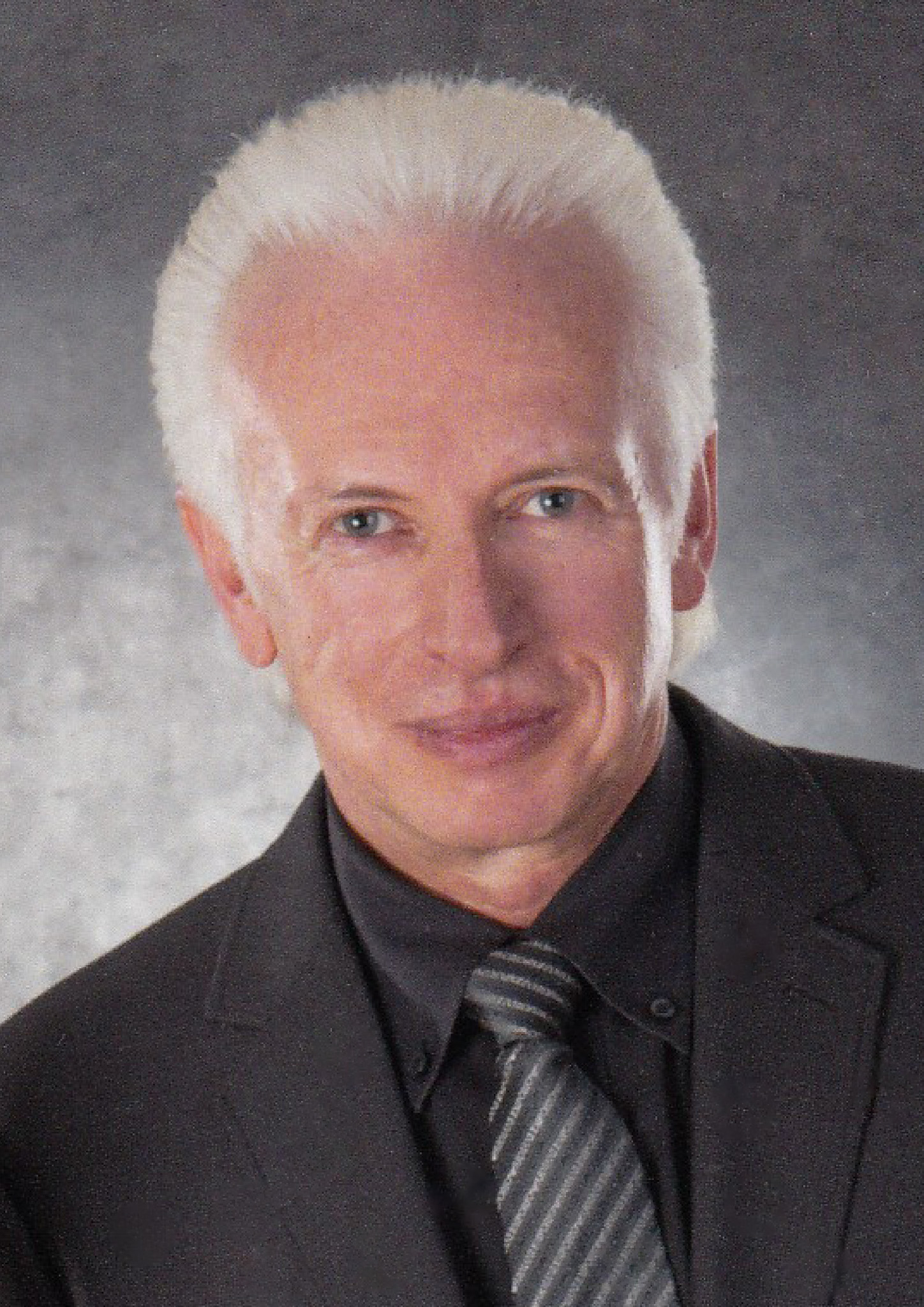
This article is based on an interview with Mr Manfred Hoelzgen, who founded the company STAR Deutschland in 1986 and served on the management board until 2017. We would like to express our heartfelt thanks to him for his fascinating insights and authentic narrative.