Posted on: July 2nd, 2026 by Frank Wöhrle No Comments
STAR Group is officially among the top 20 in the global industry! In the latest Nimdzi 100 Ranking 2026, STAR Group is ranked 19th. This underlines our position as one of the leading providers of language services in global demand.
Focus on specific sectors
The ranking particularly highlights our expertise in the areas of translation, localisation and platform licences, as well as our sector specialisations in the automotive, aviation and manufacturing sectors.
Global success through specialised solutions
This ranking reflects the strength and diversity of our global team – whether it’s implementing global e-learning localisation, creative transcreation or smart information management, the STAR Group is always there to support its clients as a competent partner. We set the standard across the language services industry and place a clear focus on complex technical requirements.
Are you looking for a top language service provider and system supplier as a partner for your translation projects? We can help you – simply get in touch.
Posted on: June 22nd, 2026 by Frank Wöhrle No Comments
tekom Germany and tecom Switzerland invite you to the Three-Country Conference ““Lost in Transformation – Transformative Kompetenzen nutzen: interaktiv, integriert und innovativ” (“Lost in Transformation – Harnessing Transformative Skills: Interactive, Integrated and Innovative”). On 26 June 2026, from 08:00 to 19:00, experts will gather at the ZHAW in Winterthur to discuss how technical writing teams can successfully navigate change.
H2: Interactive workshops at ZHAW Winterthur
The event will take place at ZHAW Winterthur. In interactive workshops, participants will reflect on and jointly develop new approaches to transformation. The aim is to gain fresh perspectives and practical ideas through interdisciplinary exchange.
H2: STAR as a sponsor and discussion partner
As a sponsor, STAR actively supports the dialogue. Julian Hamm and René Feuchtinger will be on hand for engaging technical discussions. The event is exclusively for tekom/tecom members.
Posted on: June 19th, 2026 by Frank Wöhrle No Comments
Under the title “Co-Pilot KI: Vom Prompt Engineering zum smarten Assistenten” (“Co-Pilot AI: From Prompt Engineering to Smart Assistants”), the tekom Stuttgart Regional Group invites you to an exclusive workshop (held in German language) with language technology consultant Julian Hamm from STAR Deutschland.
On 2 July 2026, from 4.30 pm to 7.00 pm, participants will be introduced to the world of prompt engineering at the Technische Akademie Esslingen e.V.
Practical insights into AI assistants for language processes
Large language models such as ChatGPT or Gemini often appear to be all-round solutions, but creating truly useful AI assistants requires targeted strategies. In this workshop, you will learn how to use the right prompts and structured datasets to create and customise AI assistants specifically for core tasks in language and translation processes.
Participants develop their own use cases
Following a brief introduction to the technical background of modern machine learning solutions, the key fundamentals for working with generative AI will be covered. The focus is on what is known as prompt engineering, as well as the appropriate preparation and provision of source and reference data for the models.
Using three practical use cases, the group will work together to develop strategies for creating AI assistants in the areas of text generation, terminology management and quality assurance. The practical part is rounded off by a slot of approximately 30 minutes, during which participants can present their own use cases in small groups and discuss their technical implementation. The workshop is aimed at participants from the fields of technical documentation, marketing and translation management, as well as translators who wish to integrate AI solutions efficiently and sustainably into their day-to-day work.
Posted on: March 26th, 2026 by Frank Wöhrle No Comments
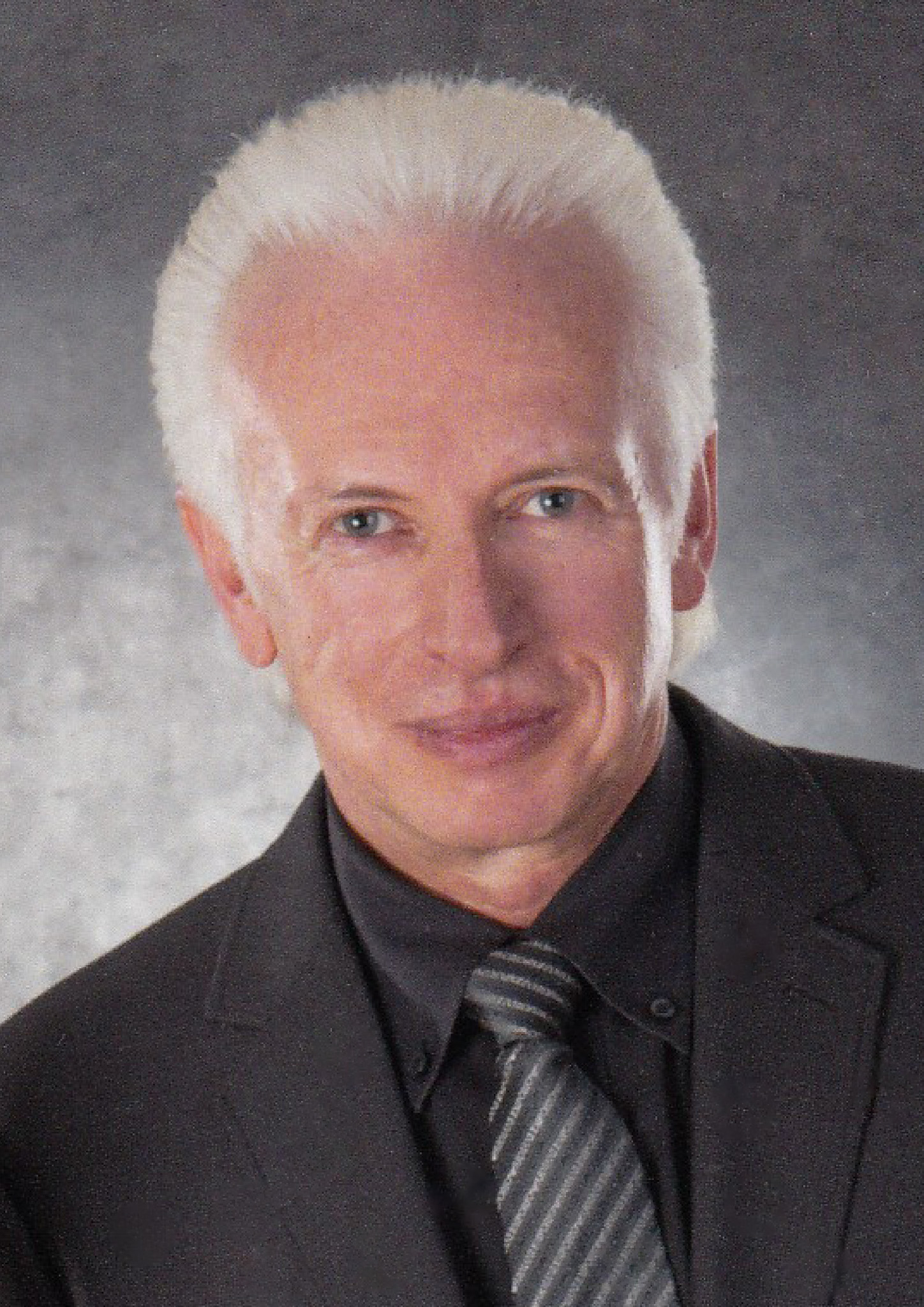
A 40-year company history in the language services sector is a small eternity in our fast-paced industry – and yet it feels as though it has all flown by. In this interview, our company founder Manfred Hoelzgen looks back on a career that has seen a radical evolution of the industry, from typewriters to AI-assisted workflows – and explains why curiosity and a passion for technology are still our greatest driving forces to this day.
From freelance translator to language service provider
When our founder talks about his early days in the industry, it soon becomes clear that it wasn’t a corporate strategy that started it all, but a heartfelt passion for translation. He worked as a freelance translator for more than a decade before taking the plunge in 1986 and setting up his own business together with colleagues from STAR AG, which is based in Switzerland. The idea was clear: professional, specialised IT translations for major technology clients – using in-house, permanently employed translators.
At the time, this was a gap in the market: IT was complex, documentation was extensive, and quality output in the target language was becoming increasingly critical for businesses. Anyone who has ever localised a mainframe or software release involving hundreds of pages of documentation knows just how much attention to detail and consistency is required. Added to this was a vision that is still part of our DNA today: to view language processes not merely as a service, but as an integral part of our clients’ product development.
Think globally, deliver locally
Right from the very beginning, internationalisation played a key role. Instead of relying solely on external supply chains, the company was able to utilise the teams that had since been established in the STAR Group’s offices around the world in the target-language countries. His conviction was that in-country specialist translators, who have been trained in-house and work closely with the project teams, could be relied upon to handle even the most challenging languages.
The STAR Group’s international approach was both unorthodox and technologically challenging. Setting up companies in countries with a completely different infrastructure, different regulations and a different business culture was, at the time, anything but straightforward. But the long-term benefit was clear: stable processes, direct communication and a profound understanding of local markets. The foundations for managing complex multilingual projects seamlessly and efficiently were laid early on.
The phone call that changed everything
An episode from the early years of the business illustrates just how much the relationship between clients and language service providers has changed. Around the year 2000, a buyer from a large company made a comment that you rarely hear these days: “I’d love to see what you’re doing there.”
What followed was a meticulously planned on-site presentation: real-life projects on the desks, carefully considered answers to hypothetical questions, a tour of the production facilities. At the end of the visit, he uttered the momentous words, “I’d like to work with you.” That marked the start of a long-standing partnership – no tenders, no bids.
Nowadays, many purchasing processes are conducted via international tenders, online portals and bids. Face-to-face conversations are being replaced by KPIs, prices and SLAs. This anecdote reminds us of the importance of genuine quality, transparency and trust – even in a world where procurement processes have become highly formalised.
From a 10 MB hard drive to AI-assisted workflows
The technological advances witnessed by our company’s founder are simply astonishing. When the company took delivery of its first PCs, the hard drive had just 10 megabytes of memory. Nowadays, of course, we’re in the realm of several terabytes, cloud infrastructures and distributed systems. That’s more than just a number – it forms the basis for how we think about language processes today.
In the early days we worked with the hardware and software that our customers used. This meant Olivetti floppy disk typewriters, specialised word processing systems or proprietary text editors – each with their own specific workflows and file formats. To ensure that language projects could still run efficiently, the company needed IT-literate staff who were equally proficient in both technology and language. It is precisely this intertwined skill that continues to shape our work to this day.
How change macros became translation memory
One particularly intriguing aspect of this story is the development of translation memory technology. In large IT projects, the very same phrases kept cropping up time and again. Instead of retyping everything from scratch every time, the team began to make creative use of the features in a developer editor tool: Find-and-Replace commands were combined into macros, saved on floppy disks and used as a primitive – but highly effective – form of pretranslation.
This pragmatic solution gave rise to the idea of developing STAR’s own translation memory system, which does not rely on complex databases but instead works with easy-to-manage language pairs. This clever system was soon christened “Translate it” – or “Transit” for short. What began as an innovation for internal processes is now an integral part of professional translation workflows and, after decades of continuous development, is still in active use.
A new business model for multilingual projects
The introduction of translation memory brought about changes not only in technology but also in the business model. Focusing on a single language combination and just one major client was no longer sufficient as the landscape of both markets and technologies changed significantly around the turn of the millennium. IT manufacturers had to become more agile, product cycles became shorter, and documentation in English alone was no longer sufficient for many countries.
The growing demand for documentation in local languages presented a host of new opportunities. Thanks to the STAR Group’s international structure and highly IT-driven process landscape, STAR Deutschland was able to offer multilingual projects that often overwhelmed more traditional organisations. Translators became project managers capable of handling complex, multi-stage localisation processes – including terminology work, quality assurance and technology integration. The crucial point here is that this transformation was achieved without losing a single member of staff. Quite the opposite, in fact – at this intersection of language and technology emerged new and exciting job opportunities.
Ever faster – but never compromising on quality
Despite all the transformation the industry has undergone, certain aspects have changed very little: price pressure and rising expectations being chief among them. Whilst regular price adjustments are the norm in many sectors, the reality in the translation industry is often quite different. Improving efficiency is the key factor in balancing quality and cost-effectiveness.
From the adoption of PCs, to translation memory, right through to automated QA checks – every new tool ultimately served a single purpose: to process a greater volume of text in less time without compromising accuracy or terminological consistency. Anyone who has been in the business for decades knows that technology is not an end in itself, but must provide tangible support to the people who are a part of the process.
The Eureka moment with AI
Our founder experienced one such moment in late 2017, when he tested a modern AI translation tool in a live environment for the first time. He was surprised by the quality of the suggestions – and it soon became clear that a new tool was emerging, one that could meaningfully complement professional translation.
Today, the combination of translation memory and AI-powered engines is employed as standard in many projects. AI can suggest synonyms, check terminology and provide alternative phrasing at the touch of a button. For translators, this means that they’re occasionally slowed down by having to check suggestions, but they gain in terms of quality and consistency, which quickly pays off across the project as a whole.
Why man won’t be replaced by machine
Despite his enthusiasm, on one point Manfred Hoelzgen is resolute: AI translation is a powerful tool, but it is no substitute for professional language experts – particularly when it comes to specialist technical documentation and marketing texts. AI reaches its limits when it comes to fully accurate content, complex specialist knowledge, cultural sensitivity or creative adaptation.
Technical documentation requires a thorough understanding of functions, processes and risks. While helpful, a terminology database isn’t enough on its own. Context, target audience, legal implications – all of these need to be assessed by a human. This is even more evident in marketing-oriented content where irony, puns, cultural references and brand voice cannot be reduced to ‘calculations’. In such cases, it’s up to the human translator to decide which phrasing really works in the target language.
Looking ahead: Internationalisation with AI
What does the future hold for language services? Given that it took nearly two decades for translation memory technology to achieve a breakthrough, it is clear that AI-assisted language processes will continue to evolve and pave the way for new scenarios that we can only dream about today. The crucial factor will be the level of quality customers expect – from “print-ready and perfected” to “fast and good enough” for spontaneous communication.
For professional language service providers such as STAR, this presents an exciting challenge when it comes to designing processes that incorporate the very latest MT and AI technology without compromising on security, consistency or brand impact. This is precisely the realm in which STAR Deutschland finds itself today: as a partner for companies looking to professionally internationalise their products and content – with a strong network of offices, experienced teams and a clear commitment to quality.
“Never rest – keep pushing ahead”
If you ask Mr Hoelzgen for his personal take on over five decades in the industry, his answer is brief – yet it fits perfectly with the times: Never rest on your laurels, but always strive to be at the forefront of progress.
This approach has shaped our history – from the typewriter to the AI engine – and will continue to guide our language processes, translations and technical writing in the years to come.
This article is based on an interview with Mr Manfred Hoelzgen, who founded the company STAR Deutschland in 1986 and served on the management board until 2017. We would like to express our heartfelt thanks to him for his fascinating insights and authentic narrative.
Posted on: March 31st, 2025 by Frank Wöhrle No Comments
We are pleased to announce that we are listed in the new Slator Index 2025 as being among the top 10 language service providers in the world. This ranking as one of the largest international translation service providers confirms our focus on customer-orientated solutions and excellence.
A huge thank you to our dedicated teams worldwide and to our customers for putting their trust in us and for our successful collaborations together!
STAR once again honoured as a “Super Agency”
Slator’s ranking includes almost 300 service providers. The “Super Agency” award recognises STAR’s comprehensive range of language solutions and translation services. The STAR Group’s independence and its turnover of more than USD 200 million are also criteria for this important categorisation.
The industry is currently undergoing rapid change with dynamic competition – conditions which are challenging for the STAR Group. By focusing on our core business, our own further developments in the areas of AI, machine translation and LLMs as well as the resolutely striving to automate our processes further, we were able to maintain our leading international position.
Slator Ranking essential for top language service providers
The Slator Index ranks the world’s largest providers of translation, localisation, interpreting services and language technology by revenue and is considered an important information platform for language industry stakeholders.
Are you looking for a top language service provider and system supplier as a partner for your translation projects? We can help you – simply get in touch.
Posted on: September 30th, 2024 by Frank Wöhrle No Comments
We offer you a warm welcome!
It’s that time again. Europe’s largest conference for technical communication, tekom, will take place in Stuttgart from 5th to 7th November.
Visit us in hall C2 at stand 2D13 and find out more about our language services, enterprise technologies and all the latest developments.
Your free ticket to the tekom trade fair
We would like to invite you to the tekom annual conference. Simply fill out this form and we will send you your personal trade fair code with which you can register straight away.
Please note: The trade fair code is only valid for visiting the trade fair. The trade fair ticket is not valid for attending the conference.
We look forward to welcoming you to the tekom events in October/November 2024.
STAR presentations at tekom (in German)
KI im Content-Recycling: Effizienz und Anpassungsfähigkeit (AI in content recycling: Efficiency and adaptability)
In the world of component content management, artificial intelligence can make a difference. Hilti, in collaboration with STAR and Amazon Web Services, has analysed Amazon’s Claude 3 model. This presentation shows how AI can improve the reuse of content and automatically adapt fragments. Discover the practical results and the possibilities for future Authoring Memories.
In this presentation, you will learn how you can use AI to increase reuse when creating technical documentation and thus save time and money.
Dominik Faupel (Hilti Entwicklungsgesellschaft mbH) Dr. Matthias Gutknecht (STAR Group) Monday, 28th October, 10:50–11:30 a.m., Online, Technology Days
Sehen und Verstehen: Visuelle Vermittlung von Produktwissen (Seeing and understanding: Visual communication of product knowledge)
Visual communication characterises our everyday lives through platforms such as Snapchat, Instagram, YouTube and TikTok. Studies show that employees can perform tasks better with visual communication, work faster and make fewer mistakes. In addition, visual content is better remembered than text. New approaches such as immersive training with 3D models and animations as well as visual remote support are gaining in importance and will be introduced in the presentation with short examples. These methods offer advantages such as location-independent learning and support, faster adaptability and cost efficiency. Visual product knowledge simplifies work preparation and execution, reduces errors and enables global support. An application example illustrates how virtual reality training is used by a European company to train technicians worldwide. Finally, it is shown how visualisations can be created synchronously with editorial content creation in the authoring environment.
LLMs und der Weg zur konsistenten Übersetzung (LLMs and the path to consistent translation)
Language models (LLMs) offer users of language technology solutions a wide range of optimisation options. In the presentation, we will demonstrate integration options using specific examples focussing on terminology and quality assurance.
Bessere Benutzererfahrung und mehr Produktivität durch semantische Produktinformationen (Better user experience and more productivity through semantic product information)
Get to know the powerful semantic component content management of GRIPS and how it tailors content precisely to user requirements and product variations.
Einfach bessere Texte mit STAR GRIPS und Congree UCC (Simply better texts with STAR GRIPS and Congree UCC)
STAR and Congree present the new STAR GRIPS interface: Discover how Congree’s functions ensure text quality in real time and make your text generation more efficient using cutting-edge AI technology.
So erhalten Sie schnell Anschluss! Eine CLM-Plattform, viele Interface-Möglichkeiten: Beispiel COTI (Get connected quickly! One CLM platform, multiple interface options: Example using COTI)
Posted on: July 18th, 2024 by Frank Wöhrle No Comments
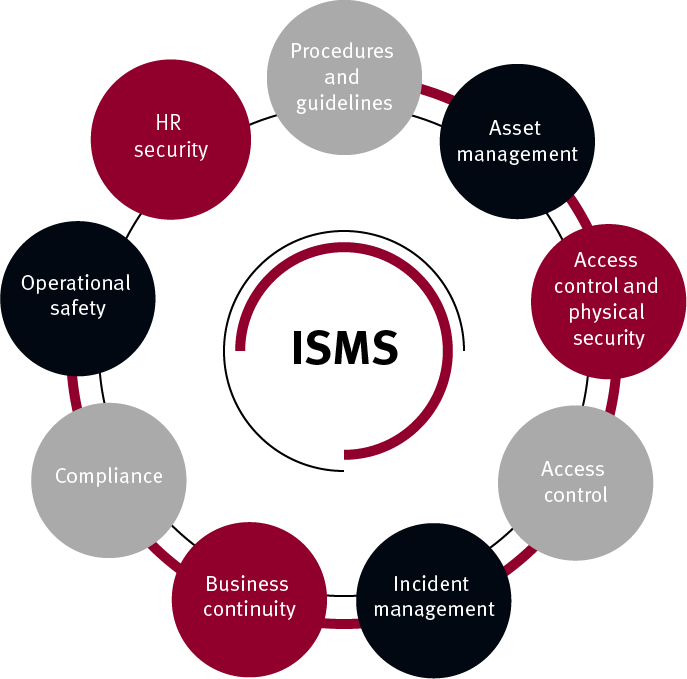
We are pleased to announce that we have passed the ISO 27001 surveillance audit for our information security management system without any discrepancies! What does this mean? It means that accredited certification body “PÜG Prüf- und Überwachungsgesellschaft mbH” has once again verified that our management system conforms with the requirements of the ISO standard and has confirmed the quality of the measures we have taken.
Data security is our top priority – we have the risks firmly under control
In today’s world, where information is of such immense value, it is vital that sensitive data is protected. It is our responsibility to protect the information that our customers entrust us with. Situations in which there is a threat to erase or misuse data can, in extreme cases, endanger the economic success of a company and its clients.
Our state-of-the-art IT infrastructure, extensive technical measures and regular awareness training sessions on information security guarantee that customer data is suitably protected at all times – from the moment it is transmitted to us until the moment the translations are delivered. We have identified the risks and routinely consider all security requirements in our day-to-day project work.
Our working relationship with our customers often sees us processing sensitive data, such as financial information or documents containing personal data. We assign this kind of information to a corresponding protection requirement class, which then determines which protective measures are applied for subsequent processing. For instance, certain encryption procedures may be used for data exchange, access to the data may be severely restricted to a limited group of people, or the translation may even be carried out in an encapsulated, secure IT environment to which only the translator and the project manager have access. There are many ways in which we can adapt to your specific data protection requirements – we will be happy to advise you in detail.
What is the standard ISO 27001 for?
ISO 27001 is a globally recognised standard that defines the requirements for introducing, operating and developing an information security management system. It specifies that certified companies must apply the ISMS principles of confidentiality, availability and integrity by means of technical and organisational measures to ensure that data is adequately protected and the availability of IT systems is guaranteed.
Posted on: June 18th, 2024 by Frank Wöhrle No Comments
From 24th to 27th June 2024, the University of Sheffield in the UK will open its doors and welcome guests to the 25th EAMT Conference for a four-day event featuring a varied programme of lectures, panel discussions and workshops exploring fascinating topics such as language technologies, machine translation and artificial intelligence.
As a long-standing sponsor of the event, STAR Group will be on site with Judith Klein, Marek Sabo and Giorgio Bernardinello.
Don’t miss the inspiring presentation on “Boosting machine translation with AI-powered terminology features”.
Posted on: May 7th, 2024 by Frank Wöhrle No Comments
According to the recently published 2024 Slator and Nimdzi indices, the STAR Group is one of the top 25 language service providers in the world. In the DACH region (Germany, Austria and Switzerland), STAR takes the top spot in terms of audited turnover!
STAR honoured as a “Super Agency”
The “Super Agency” award recognises STAR’s comprehensive range of language solutions and translation services. The STAR Group’s independence and its turnover of more than USD 200 million are also criteria for this important categorisation.
Slator and Nimdzi Rankings essential for top language service providers
The #Slator and #Nimdzi indices list the most important companies in the language industry around the world in the fields of translation, localisation, interpreting and language technology.
The STAR Group sets itself apart thanks to its successful business model, excellent customer relationships and unrivalled expertise – all of which is recognised in this magnificent ranking.
With two branches in Germany and over 100 employees, STAR Deutschland is a unique partner for your corporate communications.
Are you looking for a top language service provider to partner with you on your translation projects? If so, please get in touch – we’re here to support you.
Posted on: April 18th, 2024 by Frank Wöhrle No Comments
The perfect balance for better global reach
Multilingualism and SEO go hand in hand – when a professional is at the helm. STAR Deutschland and our colleagues from netzgefährten online marketing agency would like to invite you on a journey through the world of SEO.
Interplay between SEO and multilingualism; between AI and humans
Explore keyword and content creation strategies and learn where AI can help you. Discover the globally successful interplay between SEO and translation – between AI and humans.
Free webinar for in-depth SEO knowledge
This webinar is aimed at employees and creatives in marketing & communication, product management and sales who want to gain detailed SEO knowledge on topics such as keyword research and analysis and content creation. Join in for free!
You are currently viewing a placeholder content from Facebook. To access the actual content, click the button below. Please note that doing so will share data with third-party providers.
You are currently viewing a placeholder content from Instagram. To access the actual content, click the button below. Please note that doing so will share data with third-party providers.
You are currently viewing a placeholder content from Turnstile. To access the actual content, click the button below. Please note that doing so will share data with third-party providers.
You are currently viewing a placeholder content from X. To access the actual content, click the button below. Please note that doing so will share data with third-party providers.